
A Chilling Reckoning in the Desert: Inside Jeffrey Epstein’s “Forgotten” New Mexico House of Horrors as Officials Demand a Fresh Probe
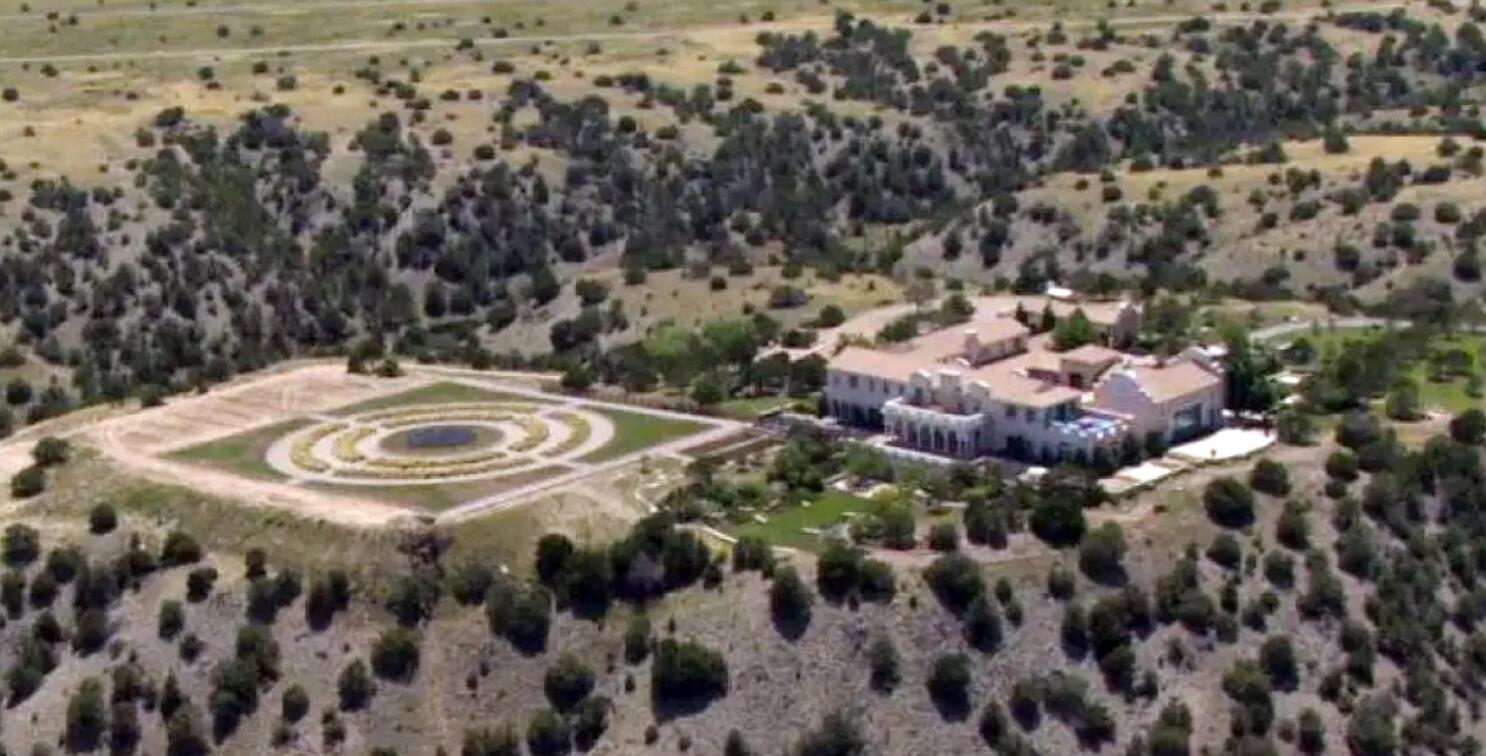
Table of Contents
The New Mexico desert holds secrets. So many secrets, stretching back generations. But few have drawn such sustained, unnerving attention as the Zorro Ranch, Jeffrey Epstein's sprawling, isolated compound tucked away near Stanley, some 30 miles southeast of Santa Fe. And now, as fresh scrutiny falls upon the estate, officials are calling for a formal investigation, a "truth commission" to peel back layers of what some believe is a deliberately forgotten crime scene. This isn't just about what happened; it's about what the state knew, or didn't want to know, for decades.
You had thought the morbid fascination might have largely centered on Little Saint James, his Caribbean playland, hadn't you? So did most. But there's this other, dustier narrative. A whole lot of it plays out across 10,000 acres of high desert terrain. It's a place described not just as a mansion, but as a genuine "house of horrors." No doubt, for far too many.
Back in 1993, Epstein acquired Zorro Ranch, reportedly shelling out around $12 million for the property from the family of former New Mexico Governor Bruce King. He built a truly massive mansion there, a structure once listed at 26,700-square-feet, then later cited closer to 30,000, maybe even 33,339 square feet. Sources varied on the exact footprint. Anyway, this place had a living room that was practically the size of an average American apartment. Pretty impressive. Other structures included guest houses, a log cabin, stables, even its own firehouse. And a yurt, oddly enough. Plus a grass airstrip with a hangar and helipad. Discreet arrivals and departures. Imagine that.
What really complicates the picture, what makes it feel particularly sinister, are those pieces of public land. Zorro Ranch encompassed private acreage, sure, but Epstein also leased about 1,200 to 1,243 acres from the New Mexico Land Commission through shell companies like Zorro Trust, later renamed Cypress, Inc. These leases, they were supposedly for "ranching and agricultural purposes." But agriculture never truly happened on those state trust lands. No livestock. No crops. Just seclusion. It created a powerful, silent buffer, a "veil of secrecy," as New Mexico Land Commissioner Stephanie Garcia Richard put it, around Epstein's private operations. She tried to visit. She was denied. Even her office's requests for scheduled visits went unreturned, necessitating an unannounced stop that proved futile.
The allegations, of course, tell a far grimmer story than mere agricultural dereliction. This property was integral, accusers say, to his alleged sex trafficking operation. Multiple women claimed they were trafficked and raped there. One accuser, Virginia Roberts Giuffre, stated in a lawsuit that was eventually settled, she was trafficked to the ranch as an underage sex-slave. Another woman, Annie Farmer, claimed abuse at the ranch as early as 1996. Details in court documents and civil cases frequently cited the ranch as a place where teenage girls were allegedly sexually assaulted. There’s a “sex dungeon” element mentioned in certain reports, describing spaces and equipment in other Epstein properties that suggest a consistent pattern of abuse across his network of homes, extending the shadow to New Mexico.
And then there's the truly disturbing revelation from The New York Times, a bombshell that speaks volumes about Epstein’s twisted mindset. He confided in scientists. He actually "hoped to seed the human race with his DNA by impregnating women at his vast New Mexico ranch." This was a eugenics lab in the making, some survivors claimed he spoke openly about this goal. Horrifying.
It is worth noting, starkly, that while federal agents did raid Epstein's mansions in Manhattan and the U.S. Virgin Islands, the Zorro Ranch was never subjected to an FBI raid. Think about that. Even after his 2019 arrest, after victim interviews, after reams of documents were handed over, this immense property in the New Mexico desert remained, by many accounts, untouched by federal law enforcement seeking physical evidence. It's almost like a missing piece in a puzzle already overflowing with horrifying implications.
The state’s own record in dealing with Epstein, well, it’s not exactly flattering. Following his 2008 conviction in Florida for soliciting a minor for prostitution, a plea deal that sparked widespread criticism, Epstein was not required to register as a sex offender in New Mexico. Why? A legal loophole. New Mexico law at the time only mandated registration for offenses involving victims under 16 years old. Epstein's Florida victim was 17. He registered briefly in 2010. Two days later, he was off the list. It allowed him to effectively avoid consequences that followed him in other states where he owned property. This, despite New Mexico Attorney General Hector Balderas acknowledging the state "continues to lag behind the rest of the country in strengthening outdated and weak laws that fail to protect our children from abuse." A "huge black eye for our state," he called it.
But that complacency seems to be fracturing. Democratic state Representative Andrea Romero of Santa Fe is spearheading a renewed push, proposing a "truth commission" to investigate what exactly went on at Zorro Ranch. The goal? To uncover what officials knew, how crimes went unreported, or how they were handled, and to fortify state protections against future trafficking. Romero has explicitly stated survivors have signaled that sex trafficking stretched to the ranch. This isn’t a small ask; the proposed investigation carries a $2.5 million budget and connects New Mexico to an international constellation of Epstein-related inquiries. Romero puts it pretty bluntly: "There's no complete record of what occurred." She intends to introduce a bill by January 2, 2026, when bills can be pre-filed ahead of the legislative session. She's working with House Democrats, trying to drum up bipartisan support for a subpoena-powered investigation. Look, a robust, independent investigative arm is vital here.
In 2019, New Mexico’s Attorney General’s office had already confirmed it was investigating Epstein’s activities and had interviewed possible victims who visited the ranch. And then in 2023, Attorney General Raúl Torrez actually ordered a separate investigation into financial businesses that enabled Epstein, leading to agreements with two banks to dedicate $17 million to human trafficking prevention. That’s something.
The Zorro Ranch itself? It was eventually sold. In 2023, after two years on the market, with an initial listing price of $27.5 million that later dropped to $18 million, the property changed hands. The undisclosed sum from that sale went into Epstein’s estate, meant for creditors and administration, not directly to victims. Records in Santa Fe County list the new owner as San Rafael Ranch LLC. And they’ve already changed its name, to Rancho de San Rafael. A fresh start for the land, maybe. But for its grim history, not so much. It's a symbolic renaming, perhaps, for a place that will carry its sinister legacy for a very long time.
Why New Mexico? Seriously. The answer, at least partially, seems to lie in its very isolation. Santa Fe Representative Andrea Romero believes the location wasn't accidental. It’s a vast, empty state. Illicit activities, quite simply, "fly under the radar" in such remote landscapes. She’s heard "from many, many different sources that New Mexico is a great place to do [sex trafficking]." That’s just horrifying to digest.
Epstein also, notoriously, had his private jet. Nicknamed the “Lolita Express” by media, though the pilots reportedly never called it that, this plane shuttled victims to various locations. Pilots acknowledged flying several known victims to the New Mexico ranch. And his longtime pilot, who flew for Epstein for nearly 30 years, actually lived in a home on the Zorro Ranch property provided by Epstein himself.
It really all points back to a central, unsettling fact. The ranch, its operations, the lack of real scrutiny. A complete and utter administrative blind spot, as one criminal defense lawyer observed, allowed Epstein to thrive with impunity here. But maybe, just maybe, this new legislative push will finally pull back that dusty veil. Perhaps some truth, after all these years, is about to emerge from the silence of the high desert. For many, that day can't come soon enough.