
The Logistics of Grief: Inside the Willis Family’s "Devastating" Christmas Restructuring
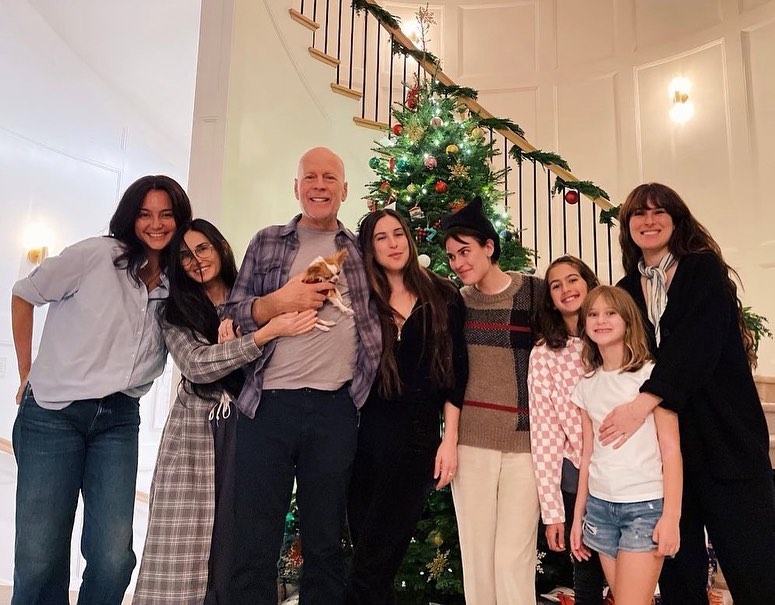
Table of Contents
The business of Hollywood usually shuts down for the holidays. Deal-making pauses. The trades go quiet. But for Emma Heming Willis, the logistics of managing a legacy and a life in decline don't adhere to a production schedule.
On Monday, the 47-year-old former model and care advocate delivered what can only be described as a sober, devastating operational update on the condition of her husband, screen titan Bruce Willis. The headline is grim. The reality is grimmer. After a three-year public battle with frontotemporal dementia (FTD), the Die Hard star has been moved into a separate facility for 24-hour care, a tactical retreat forced by the aggressive biology of a disease that takes no prisoners.
This isn’t just a sad celebrity story. It is a masterclass in crisis management, family cohesion, and the brutal calculus of long-term care.
A New Base of Operations
Let’s look at the specifics. According to reports surfacing this week, the Willis family Christmas traditionally a boisterous, blended affair involving ex-wife Demi Moore and their three adult daughters has been forced to pivot.
The "anchor" is no longer in the main house.
Heming confirmed via a candid blog post on December 22 that the 70-year-old actor will not be under the family roof for the holidays. Instead, the festivities are moving to him, or rather, being split across two fronts. "Traditions that once felt somewhat effortless require planning lots of planning," Heming wrote. "Moments that once brought uncomplicated joy may arrive tangled in a web of grief. I know this because I’m living it."
This is the reality of FTD. It’s not the "forgetfulness" of Alzheimer’s that Hollywood scripts often soften. It is behavioral. It is linguistic. It is the dismantling of personality.
Reports from RadarOnline indicate that the decision to move Willis into a specialized environment was driven by his medical needs, which have now surpassed what Heming or even a private staff can provide at home. It’s a decision familiar to millions of families, but played out here under the microscope of global fame.
Heming is blunt about the emotional ROI. "The joy doesn't cancel out the sadness. The sadness doesn't cancel out the joy. They coexist," she says. It’s a zero-sum game where the only winning move is endurance.
The Strategy of "Different"
Here is the thing about the Willis clan: they are disciplined. Since the initial aphasia announcement in March 2022, the family has operated with the precision of a political campaign. No leaks they don’t control. No paparazzi shots they don’t preempt with their own Instagram posts. They control the narrative.
But the narrative has shifted from "hope" to "management."
Heming, who released her book The Unexpected Journey earlier this year, details how the operational flow of Christmas morning has changed. Bruce used to be the "pancake maker," the kinetic energy in the kitchen. Now? Heming holds the spatula. The family will unwrap gifts. They will watch movies (yes, Die Hard is on the docket, a recursive loop of the man he was vs. the man he is). But the center of gravity has shifted.
Men’s Journal reports that Heming admits there is an "ache" in the space between "then and now." It is the ache of a phantom limb. The person is there. The presence is not.
"I’ve learned that the holidays don’t disappear when dementia enters your life. They change," she wrote. It’s a sentiment that echoes the broader industry’s realization that the Willis era is definitively over. There is no third act coming. This is the epilogue.
The Asset and the Legacy
In Hollywood terms, Bruce Willis was a blue-chip stock for four decades. He generated billions in box office receipts. He defined the modern action hero. Now, the "asset" is depreciating physically, but the brand protection strategy is fierce.
You see it in how the family handles the press. When rumors swirled earlier this year about his ability to communicate, it was Heming and Moore who stepped in to clarify, to correct, to humanize. They are preserving his dignity with the same ferocity he used to protect Nakatomi Plaza.
It is expensive work. We don't have the balance sheet, but specialized memory care for a high-profile individual involves 24/7 security, specialized nursing, and private facilities. This is a burn rate that would stagger most. Estimates on celebrity care costs suggest monthly expenditures can easily hit six figures. Willis has the resources, certainly, but the emotional toll is a debt that compounds daily.
Plus, there is the advocacy angle. Heming isn’t just caregiving; she’s rebranding. By pivoting to becoming a voice for FTD awareness, she has created a new platform. It’s a smart, if heartbreaking, use of the spotlight. She has effectively weaponized her grief to fund research and drive conversation.
The Moore Factor
One cannot analyze this situation without acknowledging the "Moore Factor." Demi Moore has been a critical stakeholder in this family unit. Her presence isn’t just supportive; it’s structural.
According to recent People Magazine coverage, the blended family dynamic is the scaffolding holding everything up. Moore, Heming, and the five daughters (Rumer, Scout, Tallulah, Mabel, Evelyn) operate as a board of directors for Bruce’s well-being.
"We are a family unit," Moore has said repeatedly. In an industry defined by divorce and acrimony, the Willis-Moore-Heming merger is the most successful partnership in town. It provides a stability that is crucial as Bruce’s condition described by insiders as "dying" accelerates.
Is it unconventional? Yes. Is it effective? Absolutely.
The Medical Reality: FTD
Let’s cut through the noise. What is actually happening to Bruce Willis? Frontotemporal dementia is nasty business. Unlike Alzheimer’s, which often starts with memory, FTD attacks the frontal and temporal lobes. These are the command centers for personality, behavior, and language.
Medical experts cited in The Independent explain that patients often lose their filter. They lose the ability to speak (aphasia). They become strangers to themselves.
Heming’s update that Bruce is "dying" (a term she used in context of the disease's terminal nature) reflects the clinical prognosis. There is no cure. There is no remission. There is only the long, slow fade.
The "separate house" detail is the tell. It signals that the behavioral symptoms may have become unmanageable in a home setting with younger children (Mabel and Evelyn are still young). It’s a safety decision. It’s a quality-of-life decision. And it is undoubtedly the hardest decision a spouse can make.
Why This Matters
Why should the industry care? Why should we?
Because Bruce Willis represents the last of a dying breed of movie stars the analogue heroes in a digital world. His decline mirrors the shift in Hollywood itself. But more importantly, the transparency of the Willis family is changing the playbook for celebrity illness.
Usually, stars fade away in secret. Gene Wilder kept his Alzheimer’s hidden to "not kill the smile" of his fans. The Willis camp has taken the opposite approach. They are livestreaming the tragedy. They are showing the ugly, messy, expensive reality of dying.
Heming’s blog post isn't just a diary entry; it’s a press release for the human condition. "Grief doesn't only belong to death," she wrote. "It belongs to change."
The Final Act
As we head into Christmas 2025, the Willis family plans are set. There will be no miracle recovery. There will be no surprise cameo. There will be a visit to a care facility. There will be pancakes made by Emma. There will be tears.
But there is also a steely resolve here. The "Die Hard" spirit isn't just a movie tagline; it seems to be the operating principle of the women surrounding Bruce Willis. They are managing the decline with a dignity that is rare in a town built on artifice.
Bruce Willis may be losing his battle with FTD. But thanks to the strategic, relentless love of his family, he isn't losing his legacy.
For the rest of us, it’s a reminder: The credits eventually roll for everyone. The only thing that matters is who is sitting in the theater with you when the screen goes black.
Sources
- RadarOnline: Bruce Willis' Wife Emma Heming Gives Devastating Update on Family's Christmas Plans
- Men's Journal: Bruce Willis Wife Shares Heartbreaking Update Before Christmas
- Hindustan Times: Emma Heming Willis shares emotional update amid Bruce Willis' dementia battle
- People: Emma Heming Willis Says Holidays Are Still 'Joyous' with Husband Bruce Willis
- The Independent: Bruce Willis' wife shares struggle with grief around the holidays
- EntertainmentNow: Emma Heming Willis Opens Up About the Quiet Pain of the Holidays