Kevin Mayer on the Looming Warner Bros. Showdown: “We’re In For More Fireworks”
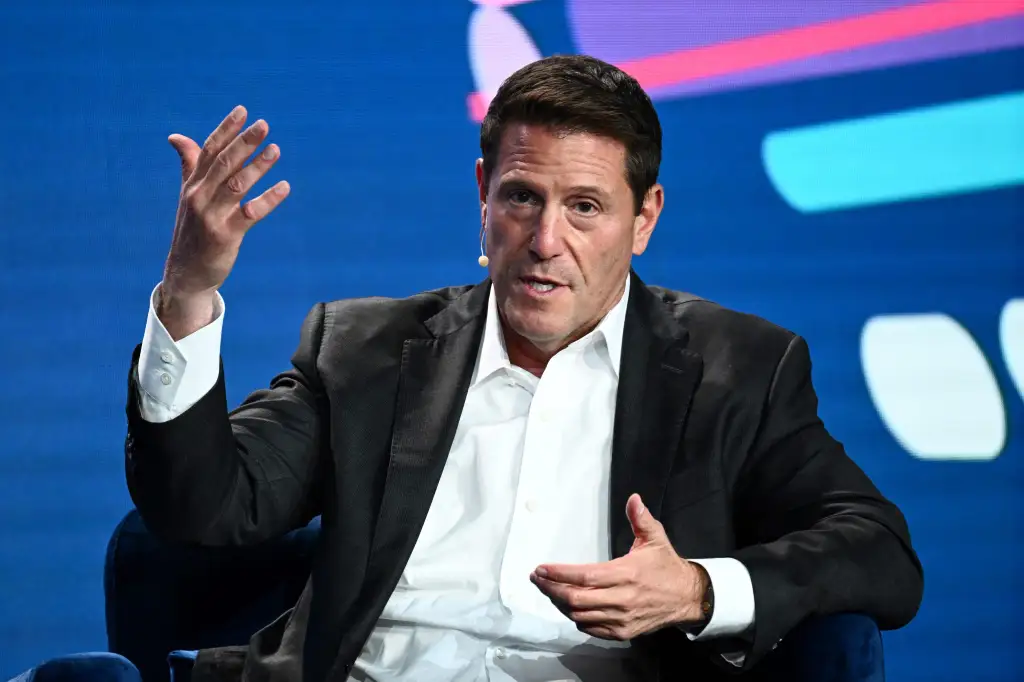
Table of Contents
Look, Kevin Mayer knows how this game works. The former Disney dealmaker, a man who literally architected the Mouse House’s most transformative acquisitions – think Pixar, Marvel, Lucasfilm, and that brutal, costly dance for 21st Century Fox – isn't just watching the battle for Warner Bros. Discovery from the sidelines. No, he's predicting the future, and frankly, it looks like a bidding war destined to escalate, leaving shareholders laughing all the way to the bank. More fireworks, he said. A lot more.
It’s an aggressive play, this whole thing. WBD, that sprawling, debt-laden entity built on the ashes of two previous corporate ambitions, was originally planning to slice itself into two shiny new companies: "Streaming & Studios" and "Global Networks." David Zaslav, WBD’s CEO, was even set to head the streaming and studios side. That was the plan, anyway, until last month when the unsolicited interest started rolling in. Multiple parties, they said, wanted a piece. Or, you know, all of it.
And now? Total chaos, exactly what we expect from this town.
The Offers, The Players, The Billions
So, here’s the setup: Just last Thursday, around December 5, Warner Bros. Discovery, after what had to be intense, backroom negotiations, settled on a deal with Netflix. The streaming behemoth agreed to snag WBD's studios and its streaming assets for a reported $82.7 billion. Cash and stock, you know the drill. That particular slice of the WBD pie, the "Streaming & Studios" segment, would give Netflix an insane content library – classics like Casablanca, sure, but also HBO's gold-plated lineup: Game of Thrones, The Sopranos. Think about that. Current WBD shareholders would be left holding the "Discovery Global" bag, which is basically the linear networks, a decidedly less glamorous business.
But then, just three days later, on Monday, December 8, Paramount Skydance strolled in, and they were not playing nice. They dropped an all-cash, hostile takeover bid for the entire Warner Bros. Discovery enterprise. Not just the glitzy Hollywood studios and HBO, no. All of it. A cool $108.4 billion, that’s $30 per share, which, let's be real, is a substantially bigger number than Netflix's offer when you account for the entire company and WBD's significant $33 billion in debt. Paramount Skydance’s CEO, David Ellison – yes, Larry Ellison's son, with a nearly endless supply of Oracle money behind him – took it directly to the WBD shareholders. A power move. Totally brazen.
This wasn’t their first attempt either. Paramount had tried to woo WBD six times before, each bid apparently spurned. So this latest offer? It was a direct, very public challenge to Zaslav's board.
Mayer’s Crystal Ball: Higher Bids and Costly Wins
Mayer, now co-CEO of Candle Media, a major player in the current media landscape, has seen this movie before. His career defining role at Disney during the acquisition of 21st Century Fox is practically a masterclass in bidding wars. Comcast, you'll remember, came in over Disney's initial offer for Fox, sparking a battle that ultimately forced Disney to pay $19 billion more than its original bid to secure the prize. An eye-watering sum. It still turned out to be a good deal for Disney, Mayer acknowledged, but definitely not the exceptional one it could have been.
He believes history's about to repeat. For WBD shareholders, he put it simply: “This is nothing but good news.” The price? “The price is going to go higher,” he stated flatly. By another $5 billion or even $10 billion. At least. Why the confidence? Mayer sees Paramount’s team as “aggressive.” He points to the “huge amount of money” the Ellisons control. There isn't "a whole lot of hesitancy to spend it," he added.
He’s calling it. “I would be very surprised if we don't see a sweetened and perhaps meaningfully sweetened offer during this process,” he mused at a recent UBS conference. “David Ellison has already hinted at that, that he hasn't done his best and final yet, and I suspect he hasn't. So I think we're in for more fireworks here.”
Honestly, he probably knows what he’s talking about. You just don't get that many major media entities without learning a few things.
The Regulatory Thorns and Political Undercurrents
No blockbuster M&A deal, especially not one of this magnitude, comes without regulatory scrutiny. This isn't just about spreadsheets and market share. There are real concerns floating around. Senator Elizabeth Warren, for example, has already labeled a potential Netflix-WBD merger an "anti-monopoly nightmare." That's a strong statement.
And think about the players: Netflix is already a behemoth in streaming. Bolstering its library with HBO, Warner Bros. films, and all those iconic IPs? Antitrust concerns are bound to escalate, analysts warn. The fear is that combining two such giants would stifle competition, reduce choice for consumers, and even lead to higher prices. Not a good look, right?
But Paramount? They're painting a different picture. Their narrative is all about "enhancing competition" and being "pro-consumer," and importantly, "pro-Hollywood." Their argument is simple: keeping the entire Warner Bros. Discovery entity whole – traditional networks included – is better for everyone. Paramount is betting on a smoother ride through the regulatory gauntlet, hoping to appear as the white knight compared to Netflix’s perceived monopolistic threat.
Then you have the wild card: Former President Donald Trump. He's reportedly already weighing in, advising that WBD should sell to the "highest bidder" while also flagging concerns about Netflix’s growing market dominance. David Ellison, who, it's worth noting, has ties to the Trump administration – Jared Kushner's firm and the Saudi Public Investment Fund are financing partners in Paramount's bid – has reportedly already made promises about "sweeping changes" to CNN if Paramount acquires WBD. These aren't just business deals; they’re tangled with politics, and that never makes things simple.
The HBO Max Question and Zaslav’s Dilemma
Mayer offered another interesting insight, specifically on Netflix’s motivation. He suspects Netflix’s primary interest in Warner Bros. is really about securing those top-tier film and TV studios, less about a direct acquisition of HBO Max itself. Mayer rates Warner Bros. as arguably the "second best studio" for franchises, only after Disney. And if antitrust issues do crop up regarding the streaming aspects? He thinks Netflix might even be willing to "make concessions" on HBO Max to clinch the deal for the overall studios and their invaluable intellectual property. A powerful statement, suggesting that while streaming is important, the core IP engine is truly the prize.
David Zaslav, WBD’s CEO, now finds himself in an impossible position. His board already approved the Netflix deal. Walking away? That’s a painful $2.8 billion termination fee WBD would have to cough up. So, officially, WBD is still committed to the Netflix agreement, advising shareholders to, you know, "take no action" for now on Paramount’s unsolicited public offer. But a hostile takeover means Paramount can bypass the board and go straight to the shareholders. It's an old tactic, a good one, and it certainly ratchets up the pressure.
Paramount believes its all-cash offer for the whole company gives it an edge, especially with concerns about the long-term value of the spun-off linear networks under the Netflix deal. There’s also a big debate brewing over how much those cable networks are actually worth. WBD is valuing them at $3 to $4 per share. Paramount says, “Nah, more like $1 per share.” A massive disparity. We might get some clarity on that when Comcast’s cable TV spinoff, Versant Media Group, starts public trading in January 2026. That will provide a real-world comparison.
Consolidation, Shrinkage, and What It All Means
This whole saga underscores a much larger truth about the entertainment industry: Consolidation is not just coming; it’s here. It's happening. The fragmented, "growth-at-all-costs" era of streaming, where every studio had to have its own app, is definitively winding down. As Zaslav himself noted earlier this year, 2025 was set to "offer a pace of change and an opportunity for consolidation… that would provide a real positive and accelerated impact on this industry that's needed." He meant it.
Mayer himself, a seasoned seller in the current market with companies like Hello Sunshine and Moonbug under Candle Media, also foresees that this intense M&A activity means the overall industry will "certainly shrink." Think fewer competitors. Reduced output of creative content. That's a stark reality, one we're probably already seeing the beginning of across Hollywood and media.
For Warner Bros. Discovery, though, this fierce bidding war is undeniably a boon. Their value, caught in the crossfire of these two media giants, will almost certainly be driven even higher. Expect this battle to rage not just for days or weeks, but well into 2026. The endgame for WBD, for Netflix, and for Paramount is still murky. But one thing is absolutely clear: the fireworks Mayer promised? They’re just getting started. It’s going to be one hell of a show.