
Ari Emanuel
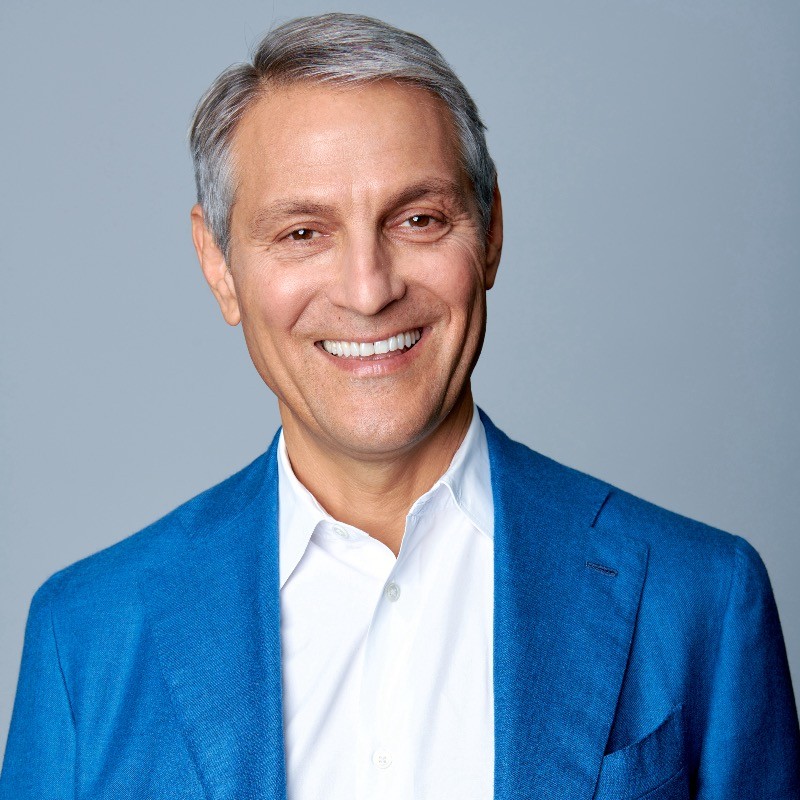
Table of Contents
Ariel "Ari" Emanuel built one of the most powerful entertainment companies in the world from scratch. He co-founded Endeavor in 1995 as a scrappy talent agency, merged it with William Morris to create WME in 2009, then spent the next decade acquiring everything from UFC to IMG to fashion weeks. In March 2025, the whole thing went private in a $25 billion deal, with Emanuel pocketing $173.8 million in cash while staying on as executive chairman of WME Group and CEO of TKO Group (which owns UFC and WWE).
He's also the guy who inspired Ari Gold, the foul-mouthed agent in HBO's "Entourage" - which isn't far from reality. Emanuel's aggressive, hyperactive, deal-making style has made him one of Hollywood's most powerful figures. The New York Times called him "the prominent power player in Hollywood." And he did it all while managing dyslexia and ADHD so severe that as a kid, he couldn't read at grade level.
Growing Up "Stupid" in a Family of Geniuses
Emanuel was born March 29, 1961, in Chicago. His father Benjamin was a pediatrician, his mother Marsha a civil rights activist. Sounds impressive until you meet his brothers: Rahm Emanuel (former Chicago mayor and Obama's chief of staff) and Ezekiel Emanuel (bioethicist and head of the Department of Bioethics at the National Institutes of Health). The Emanuel family dinner table was intense - you had to read the newspaper daily and defend your political opinions every night.
For Ari's brothers, that was fine. For Ari? It was torture. In third grade, he was diagnosed with dyslexia and ADHD. His reading skills were two years behind his age group. He failed miserably at reading and English while excelling in math. His mother dragged him to reading teacher after reading teacher, sometimes for three hours a day. "I remember crying every day when I had to go to the reading teacher for three hours and sit in that front window," Emanuel told Bloomberg years later.
At New Trier West High School, one of the most competitive public schools in the country, they stuck him in special education. "Brutal," is how he describes it. People made fun of him every day - athletes, other students, his peers. "I probably had it a little easier than the other kids in special ed because I was a decent athlete. Being an accomplished wrestler made me feel like less of an outcast, but I still got myself into a lot of fights and ended up in the principal's office every other day."
He recalls one incident where another student called him stupid and he responded by slamming the kid's head against a wall. Teachers told him he wasn't going to college. His mother didn't listen to them. She kept hiring tutors, kept pushing, kept refusing to accept that her son couldn't learn.
"I had Ritalin. Horse pills of it," Emanuel said. "I was on the ceiling. The Ritalin helped, but reading was an enormous task." He told one high school teacher his goal: "I want to make a lot of money." Not save the world like his brothers - just make a lot of money.
Robocalling His Way Into Hollywood
Emanuel graduated from Macalester College in St. Paul, Minnesota in 1983 with a degree in economics and computer science. He briefly pursued professional racquetball before deciding to move to Los Angeles in the late 1980s to become a talent agent. Problem: nobody wanted to hire him. He was "too old" at 26 - most agencies hired right out of college.
So Emanuel did what would become his signature move: he went absolutely insane with persistence. He robocalled the head of HR at Creative Artists Agency (CAA) more than 300 times. Actually, as he puts it, "a lot more than 300 times." Finally, on a Thursday, they broke: "If you can be out here on Monday, you have a job."
Emanuel started as a CAA trainee in 1987. Even though reading scripts was hard for him, he didn't let the dyslexia stop him. He just worked around it - waking up before dawn to do his reading, using people around him to help process information, developing an aggressive verbal style that made up for any written weaknesses.
In 1990, he left CAA to join Intertalent as a partner. Two years later, he moved to International Creative Management (ICM) as a senior agent. He was building his reputation, collecting clients, learning how the business really worked.
Starting Endeavor: "It's Ari Fucking Emanuel!"
In 1995, at 34 years old, Emanuel co-founded Endeavor Agency with three partners. It was a boutique operation, but Emanuel brought intensity and hustle that bigger agencies couldn't match. His approach was simple: work harder than everyone else, be more aggressive than anyone else, never stop moving.
Tech investor Sean Parker has a story that captures Emanuel perfectly. It was 2009. Emanuel had been emailing Parker because someone suggested they connect. Parker knew who he was - everyone in Hollywood knew Ari Emanuel by then - but Parker was busy and didn't respond. Then one day Parker was sitting in a meeting at the SpaceX factory with Elon Musk and Larry Page. Somebody came up from behind, put hands on Parker's shoulders, and started shaking him violently.
"'It's Ari Fucking Emanuel!' the person shouted. 'Read your e-mail!'" Parker told Fortune. Parker was literally and figuratively shaken. He apologized. They became close professional friends. That's Emanuel - he doesn't take no for an answer, and he doesn't wait for people to get back to him.
MSNBC's Joe Scarborough and Mika Brzezinski (both Emanuel clients) will be on their show at 6 a.m. East Coast time, and their phone rings at 6:03. It's Ari. Every time. Emanuel sleeps about 4.5 hours a night, plus a 15-minute post-lunch nap. That's ADHD giving him extra waking hours, and he uses every single one of them.
The WME Merger: Creating a Powerhouse
In 2009, Emanuel orchestrated what he calls "the largest talent agency merger in history" - Endeavor joining forces with William Morris Agency (founded in 1918 and already a Hollywood institution) to form William Morris Endeavor (WME).
This was huge. Suddenly Emanuel's scrappy agency had the credibility and infrastructure of one of Hollywood's oldest names, plus the aggressive dealmaking culture Emanuel brought. WME became one of the "big three" agencies along with CAA and UTA, representing everyone from Martin Scorsese to Larry David to Mark Wahlberg.
But Emanuel wasn't done. Not even close.
Going Way Beyond Talent: The Expansion Years
In 2012, WME formed a strategic partnership with Silver Lake, a private equity firm that specializes in technology investments. This gave Emanuel capital to do what he really wanted: build an empire that went way beyond just representing talent.
In 2014, WME and Silver Lake bought IMG for $2.4 billion. IMG wasn't just a sports agency - it controlled fashion weeks in New York, London, and Milan. It ran IMG Models. It produced major sporting events globally. Overnight, Emanuel went from representing actors to controlling massive cultural events.
In 2016, they acquired UFC for about $4 billion. Now Emanuel owned the world's premier mixed martial arts organization. Dana White, the face of UFC, worked for Emanuel.
In 2017, Emanuel renamed the whole operation Endeavor, making it clear this was now a holding company for a global entertainment and sports empire, not just a talent agency.
In 2023, Emanuel merged UFC with WWE (World Wrestling Entertainment) to create TKO Group, which went public. Endeavor owned 51%, WWE shareholders owned 49%. The deal valued TKO at $21 billion.
The Dyslexia Advantage
Here's the thing Emanuel figured out: his dyslexia and ADHD weren't just obstacles to overcome. They were advantages in the business he chose. "I believe that people who struggle with dyslexia are given the insight to find inventive solutions in life and business that others probably never find," he told the Yale Center for Dyslexia & Creativity.
The ADHD gives him the ability to focus intensely on multiple businesses at once and never stop moving. "The ADHD enables me to kind of move around and focus a lot on specific businesses," he explained to Bloomberg. "And the dyslexia, for whatever reason, it does enable me to kind of think in a different way."
When you're dyslexic, you learn to use people around you to help you learn. In business, that translates to trusting your team, empowering people, not trying to do everything yourself. Emanuel built Endeavor by hiring great people and letting them run.
"I'm not afraid of risk because I went through a lot of tough times reading and embarrassment," Emanuel said. "So nothing now kind of shakes me up." When you've been called stupid your whole childhood, when teachers said you'd never graduate high school, losing a business deal doesn't seem that scary.
Emanuel gets up at 4 a.m. and works out "like a madman." It works. He doesn't take Ritalin anymore - he's learned to channel that hyperactivity into productivity. Reading scripts still takes him longer than most people, so he does it before dawn when the world is quiet.
Going Private: The $25 Billion Deal
By 2021, Endeavor had gone public on the New York Stock Exchange. But the public markets didn't love the complex structure - talent agency mixed with sports properties mixed with event production. In 2024, Silver Lake offered to take it private again.
The deal closed in March 2025. Silver Lake paid about $25 billion for the company (when you include TKO's value). Endeavor changed its name to WME Group, refocusing on the representation business. TKO remains a separate public company that Emanuel still runs.
Emanuel moved from CEO to executive chairman of WME Group. He took out $173.8 million in cash while rolling over another $290 million in ownership. His longtime partner Patrick Whitesell got $100 million cash and left to start a new Silver Lake-backed venture.
Emanuel also remains an active agent, still representing Martin Scorsese, Larry David, Pete Berg, and Mark Wahlberg personally. He's not sitting in an office counting money - he's still making deals.
The Complicated Legacy
Emanuel's success is undeniable. He built a billion-dollar empire from nothing, representing over 1,000 A-list clients over his career. He's been recognized on every power list - Fortune's Businesspersons of the Year, Fast Company's Most Creative People in Business, Variety's most influential people in entertainment.
But success at his level doesn't come without controversy. Emanuel's aggressive style has made enemies. His deals have been questioned - did he expand too fast? Was the public company sustainable? Industry insiders debate whether vertical integration (owning everything from agents to events to sports leagues) is good for talent or just good for Emanuel.
His partnership with Whitesell ended badly, with reports they weren't even speaking by the end. The go-private deal left some Endeavor shareholders feeling like they got a bad price. And some clients have questioned whether Emanuel's focus on building an empire meant less attention on their careers.
Advocating for Learning Differences
Despite running a global entertainment empire, Emanuel has stayed committed to advocating for kids with dyslexia and ADHD. In 2008, he received the Outstanding Achievers with Learning Disabilities Award from the Lab School of Washington and Baltimore.
He's on the Board of Advocates for Understood.org, where he urges parents to get early help for their children's learning disabilities. "Parents need to get involved," he emphasizes. His mother's refusal to accept that he couldn't learn saved his life, and he wants other parents to fight the same way for their kids.
He's done videos talking about raising his own three sons with dyslexia. His message: these aren't disabilities to fix, they're differences that, properly supported, can become advantages. Kids with dyslexia learn to think differently, solve problems creatively, use people around them effectively - all skills that matter way more in adult life than reading speed.
What's Next
At 64, Emanuel shows zero signs of slowing down. He's executive chairman of WME Group, CEO of TKO Group, and still actively represents clients. He recently launched MARI, a new company focused on events and experiences, which acquired IMG's tennis events and the art organization Frieze.
He wakes up before dawn, works out intensely, reads scripts for his clients, runs multiple businesses, makes deals. The hyperactivity that made childhood brutal has made adult life extraordinarily productive. The dyslexia that got him called stupid taught him to think differently than everyone else in Hollywood.
"I believe that people who struggle with dyslexia are given the insight to find inventive solutions in life and business that others probably never find," Emanuel has said. He's living proof.
Sources:
- Variety - Endeavor Goes Private, Renamed WME Group
- Variety - Ari Emanuel Gets $173.8 Million Cash Payout
- The Hollywood Reporter - Endeavor Goes Private
- Yale Center for Dyslexia & Creativity - Ari Emanuel Profile
- Fortune - Hi, It's Ari @#$%ing Emanuel
- Economic Club of Chicago - Ari Emanuel Address
- Underdog Mindset - Dyslexia to Hollywood Superagent
- TKO Group - Ari Emanuel Board Profile