
Scooter Braun
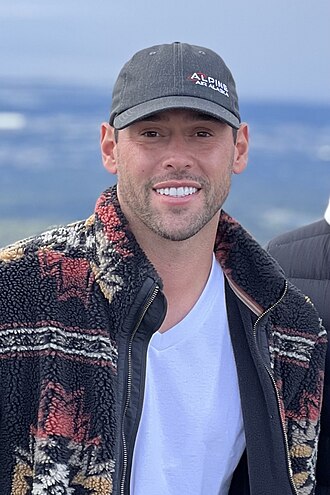
Table of Contents
Scooter Braun turned a YouTube video of a 12-year-old kid singing into a billion-dollar empire. He's the guy who discovered Justin Bieber, managed Ariana Grande through a terrorist attack at her concert, and sparked the ugliest public feud in modern music history when he bought Taylor Swift's masters. In June 2024, after 23 years, he announced he's done managing artists. But the damage - or the legacy, depending on who you ask - is already done.
Scott Samuel Braun was born June 18, 1981, in New York City. Grew up in Greenwich, Connecticut. His parents were both dentists - Ervin and Susan Braun. Jewish family. His grandparents survived the Holocaust, which shaped how the Brauns thought about resilience and community.
The nickname "Scooter" came from first grade and never left. At Greenwich High School, he was class president. Basketball ran in the family - his dad coached high school and AAU ball, and all three of his brothers played Division I college hoops. Scooter played too, but his real talent was somewhere else entirely.
The Atlanta Hustle
Braun went to Emory University in Atlanta. Played basketball for two years before dropping out. But here's the thing - while he was there, he wasn't just shooting hoops. He started throwing parties at local clubs. Good parties. The kind that got noticed.
By 19, he was executive director of marketing at So So Def records. That's Jermaine Dupri's label. One year from college dropout to record label executive - not bad.
In 2002, he got hired to plan after-parties for the Anger Management Tour. Ludacris. Eminem. Five major cities. He also handled the 2003 NBA All-Star Weekend parties in Atlanta. If you were there, you went to a Scooter Braun party.
He left So So Def in 2005. Some disputes with management. Struck out on his own, promoting rappers like Ludacris and Asher Roth. Except the money ran out fast. Really fast.
His dad called when Braun was down to his last two months of cash. Scooter broke down on the phone. Ready to quit, come home, admit defeat. His father told him to stick it out just a little longer.
The next day, Asher Roth played "I Love College." That song - that one stupid college anthem - saved Braun's entire company. Sometimes you get lucky.
Finding Bieber
- Braun's watching YouTube videos - probably procrastinating - when he stumbles on a kid singing Ne-Yo's "So Sick." The kid's 12, posting from Stratford, Ontario. Cute kid. Great voice. But mostly, Braun sees dollar signs.
He tracked down the mom. Pattie Mallette wasn't exactly thrilled about some random guy from Atlanta wanting to manage her son. But Braun convinced her. Got them to Atlanta for a tryout.
Then he partnered with Usher - formed Raymond Braun Media Group - and signed Bieber to Island Def Jam.
What happened next? Global phenomenon. "Baby" went multi-platinum. Sold-out world tours. Screaming teenage girls everywhere. The kid who got discovered on YouTube became the biggest pop star since the Beatles.
Braun produced "Never Say Never" in 2011 - a concert documentary about teenage Justin that somehow grossed over $73 million worldwide. Not bad for what was essentially a filmed concert.
SB Projects: Building an Empire
In 2007, Braun established SB Projects. Not just artist management - a full multimedia company. Schoolboy Records. SB Management. Sheba Publishing. Plus RBMG, the joint venture with Usher.
This wasn't your grandfather's talent agency. Braun built brands around his artists. Calvin Klein campaigns. Adidas partnerships. Licensing deals. TV and film production. Everything integrated. School Boy Records cut a distribution deal with Universal Music Group, which meant real money and real reach.
Ariana Grande signed with Braun in early 2013. By 2016, her label Republic Records confirmed him as her main manager. There's actually a messy story there - Grande reportedly fired him at some point because of boyfriend drama. When the "shitty boyfriends" left (Braun's words), she called him back. Good thing too, because that rebuilt relationship mattered in 2017 when a bomb killed 22 people at her Manchester concert.
The client list over the years read like a Billboard Hot 100: Justin Bieber. Ariana Grande. Demi Lovato. Carly Rae Jepsen (whose "Call Me Maybe" became unavoidable in 2012). Psy and "Gangnam Style." J Balvin. Kanye West. Tori Kelly. Dan + Shay. Zac Brown Band. Martin Garrix. Lil Dicky. The Kid Laroi. Quavo.
If they were huge in the 2010s, Braun probably had something to do with it.
The Tech Bets That Paid Off
Braun wasn't satisfied just managing singers. In 2010, he launched Ithaca Holdings with $120 million in venture capital. The money came from - wait for it - Spotify and Uber. Yeah, he invested in them, they gave him money to invest in other things. That's how you build wealth.
He was early on Uber. Met Travis Kalanick, the co-founder, and saw the hunger. The valuation seemed insane, but Braun bet on the passion. Same thing with Spotify - Daniel Ek was on Billboard's "30 Under 30" list with Braun. They hung out over a weekend, became friends, and by Monday Braun was writing checks.
Uber. Spotify. Waze. Dropbox. Pinterest. Those early bets printed money.
By 2017, private equity firm Carlyle Group became a minority investor in Ithaca. Two years later, they pumped in more cash at an $800 million valuation. Braun stayed majority owner through it all.
Ithaca Holdings grew into something massive - music, film, TV, tech. Braun co-founded Mythos Studios with David Maisel (the guy who built Marvel Studios) to develop movie franchises. He produced TV shows like "Scorpion" and "Dave" on FX.
More recently? He's been betting on AI. OpenAI. Scale AI. Nvidia. When AI exploded in value, so did Braun's portfolio.
The Big Machine Acquisition and Taylor Swift Feud
On June 30, 2019, it was revealed that Scooter reached a deal to acquire Big Machine Records for a reported $300-$350 million with backing from Carlyle. Big Machine was founded in 2005 by Scott Borchetta, who discovered and signed a 15-year-old singer named Taylor Swift after seeing her perform at a Nashville cafe.
With the acquisition, Braun became the owner of the master recordings for Swift's first six albums: "Taylor Swift," "Fearless," "Speak Now," "Red," "1989," and "Reputation." He also acquired a roster of country artists including Sheryl Crow, Thomas Rhett, Florida Georgia Line, and Lady Antebellum.
The same day the deal was announced, Taylor Swift posted a scathing statement on Tumblr. "For years I asked, pleaded for a chance to own my work," Swift wrote. She called the sale her "worst case scenario" and accused Braun of being an "incessant, manipulative bully."
Shortly afterward, the pop star shared a Tumblr post calling the sale her "worst case scenario," accusing Braun of "incessant, manipulative bullying" over the years and including a screenshot of a post from Justin Bieber featuring Braun and Kanye West with the caption, "Taylor swift what's up."
Braun recalled on a podcast: "When I bought Big Machine, I thought I was going to work with all the artists on Big Machine. [Taylor] and I had only met three or four times. One of the times, it was years earlier, it was really a great engagement. She invited me to her party. We respected each other. In between that time since I'd seen her last, I started managing Kanye West. I managed Justin Bieber. I knew she didn't get along with them. This is where my arrogance came in. I had a feeling she probably didn't like me because I managed them, but I thought once this announcement happened, she'd talk to me, see who I am, and we'd work together. Then this Tumblr comes out, and it says all of this stuff, and I was just shocked."
While accepting the Woman of the Decade honors at Billboard's Women in Music event, Swift touched on her feud with Braun: "Lately there's been a new shift that has affected me personally and that I feel is a potentially harmful force in our industry, and as your resident loud person, I feel the need to bring it up. And that is the unregulated world of private equity coming in and buying up our music as if it is real estate. As if it's an app or a shoe line. This just happened to me without my approval, consultation, or consent. After I was denied the chance to purchase my music outright, my entire catalog was sold to Scooter Braun's Ithaca Holdings in a deal that I'm told was funded by the Soros Family, 23 Capital, and the Carlyle Group. Yet to this day none of these investors have ever bothered to contact me or my team directly."
Braun claimed that Swift "weaponized" her fanbase by making the dispute public. He said his family had been excessively bullied by Swift's fans whom she had urged on her social media to "let Scott Borchetta and Scooter Braun know how you feel about this." Citing "numerous death threats" he received, Braun stated, "It's very dangerous. There's people in that fan base who have mental health issues. There's families involved, and I think that's very, very dangerous."
On November 17, 2020, it was announced that Scooter had sold Taylor Swift's catalog to an investment firm called Shamrock Capital, which was founded by Roy E. Disney, one of Walt Disney's nephews. The sale was reportedly for a higher amount than Braun paid a year and a half prior. Swift was reportedly offered a chance to become an equity owner in her catalog with Shamrock, but turned down the offer after learning that the terms of the sale would allow Scooter to continue earning royalties off her music for years to come.
Swift's response? She announced she'd re-record all six albums, creating "Taylor's Version" of each. Starting in 2021, she released "Fearless (Taylor's Version)," "Red (Taylor's Version)," "Speak Now (Taylor's Version)," and "1989 (Taylor's Version)" - all massive commercial successes. iHeartRadio, the largest radio network in the United States, replaced the older versions in its airplay with Swift's re-recorded tracks.
In May 2025, Swift finally bought back her original masters from Shamrock Capital. Braun told Billboard at the time, "I am happy for her."
A two-part documentary about the dispute, "Taylor Swift vs Scooter Braun: Bad Blood," was released in 2024. After the documentary aired, Braun told an audience at the Bloomberg Screentime event in Los Angeles that he wishes people "would move on." "Look, it's five years later. I think, everyone, it's time to move on. There were a lot of things that were misrepresented."
On a podcast in 2025, Braun said he believes "everybody in the end won," despite the years-long feud. "We did very well in that sale because we bought it at a really great price and the value of the masters went up. When I sold it, she had announced she was gonna do rerecords. And if you understand music, the value went up for the masters because Spotify and streamers created a longer decay than buying just CDs. People would listen to them more, so there's a longer decay, but it's still decaying. But when she rerecorded, all ships rise in a world of streaming. So people were going on and they were A/B-ing them. They were listening in to see how much they sounded like [the originals]. So she did incredibly well and basically had the biggest moment of her career, reinvigorating her career with each one."
Selling Out (In the Good Way)
- Braun sold Ithaca Holdings to HYBE Corporation - the South Korean entertainment conglomerate behind BTS - for over $1 billion. He got $86 million in HYBE stock and became CEO of HYBE America.
Think about that for a second. The kid who dropped out of Emory just sold his company for a billion dollars to a K-pop powerhouse.
HYBE got a foothold in the Western market. Braun got access to a multi-billion dollar global entertainment machine. Win-win. His job? Oversee HYBE's U.S. expansion, develop new artist partnerships, figure out how to blend K-pop's insane fan engagement strategies with Western pop.
The Charity Side
Look, Braun's made a lot of enemies. But the charity work? That's real.
His younger brother Adam founded Pencils of Promise after a kid in India told him his greatest wish was "a pencil." The organization builds schools in developing countries. Braun and Bieber both threw their weight behind it. Result? Over 200 schools built across Asia, Africa, and Latin America.
In 2017, Billboard reported that Braun - along with his clients and companies - granted more Make-A-Wish requests than any other organization in the foundation's history. That same year.
May 2017. A suicide bomber killed 22 people at Ariana Grande's concert in Manchester. Braun didn't just issue a statement. He organized "One Love Manchester" - Grande, Bieber, Coldplay, Katy Perry, Mac Miller, Miley Cyrus. Millions raised for victims' families.
Later that year, Hurricanes Harvey and Irma devastated Texas and Florida. Braun organized "Hand in Hand" - a massive telethon for relief funds.
March 2018. Braun co-organized March for Our Lives with George Clooney and his team - the student-led gun control demonstration in DC after the Parkland school shooting. Became one of the largest single-day protests in U.S. history.
Through the Braun Family Foundation, he supports This Is About Humanity, Fuck Cancer, HIAS, the First Responders Fund. He sits on national boards for Pencils of Promise and Make-A-Wish.
Most recently? The Nova Exhibition, touring the U.S. right now, commemorating victims of the October 7th massacre at the Nova Music Festival in Israel.
In 2016, he won "Best Talent Manager" at the International Music Industry Awards. In 2018, the Harry Chapin Memorial Humanitarian Award for his charity work.
Awards and Recognition
Braun appeared on the cover of Billboard in the special August 11, 2012 issue, "Forty Under Forty" titled "Scooter Braun and Other Power Players on the Rise." Braun was featured in the Time 100 list in 2013. He also appeared a second time on the cover of Billboard magazine in the April 20, 2013 issue, alongside Guy Oseary and Troy Carter.
He was nominated for Grammy awards for his work on Justin Bieber's albums "Purpose" (2017) and "Justice" (2022).
Variety magazine named him "Music Mogul of the Year" in 2021.
Marriage, Divorce, and Everything That Went Wrong
Braun started dating Yael Cohen in 2013. She's a South African-born, Canadian-raised activist who founded F**k Cancer after her mom got diagnosed. They got married July 6, 2014, in Whistler, British Columbia. Had three kids in five years - two boys (2015, 2016) and a girl (2018).
July 6, 2021. Their seventh anniversary. Braun posted this heartfelt Instagram message thanking Yael for making him a better man. Two weeks later, he filed for divorce in LA. The timing? Brutal.
The divorce got finalized in September 2022. They had a prenup, which saved them from years of legal hell. Here's how the money split:
Braun kept: $65 million Brentwood mansion. $40 million private jet. Over 100 pieces of art including Andy Warhol pieces. A Porsche. A Tesla.
Yael kept: Separate $30 million Brentwood home. More artwork. A Land Rover. Her own bank accounts. Plus a $20 million check from Braun to balance things out.
Joint custody of the kids. Braun pays $60,000 monthly child support.
What caused it? Rumors flew. The Blast reported they'd grown distant while Braun obsessed over the Big Machine deal. Radar Online said Braun made Yael sign an NDA about the divorce. Whispers about infidelity on both sides.
Braun addressed it on a podcast in 2025, keeping it vague: "I don't want to go into detail, because I have a lot of respect. We're family forever. It goes both ways. It's not like there was one thing happening. Both people have to play a role in where we got to. Things happened both ways."
His advice for other couples? "Go on vacations together. That's something that we forgot to do: We did the vacations with the kids, we did the vacations with friends, but we didn't vacations together, because we had three kids in five years."
The divorce hit right when everything else was falling apart - the Taylor Swift backlash, clients leaving, career imploding publicly. Braun checked into the Hoffman Process Program in Northern California. It's a treatment center. He was dealing with depression, by all accounts.
When Everyone Left
Summer 2023. The news started trickling out, then it became a flood. Braun's biggest clients were bailing.
Demi Lovato: gone. Ariana Grande: gone. J. Balvin left in May. Idina Menzel ended things in January 2023 after just four years. Carly Rae Jepsen, BabyJake, Asher Roth - all confirmed they weren't with Braun anymore and hadn't been for a while.
Sources told Variety that Braun had been basically hands-off with his big clients for years anyway. Other executives handled the day-to-day while he focused on running HYBE America. But still. The optics were terrible.
Grande moved to Brandon Creed at Good World Management, though she kept her business ties with HYBE America. Bieber? Rumors flew that he was leaving too, though nothing official came out.
Nobody gave concrete reasons. Just a wave of defections all at once. Speculation ran wild - was it the Taylor Swift fallout? Was Braun too distracted with his corporate CEO role? Did clients feel abandoned?
Whatever the reason, by the end of 2023, SB Projects looked like a shell of what it once was.
Calling It Quits
Monday, June 17, 2024. Braun posted a nearly 1,400-word Instagram statement. After 23 years, he's done managing artists.
"I have been blessed to have had a 'Forrest Gump'-like life while witnessing and taking part in the journeys of some of the most extraordinarily talented people the world has ever seen. I'm constantly pinching myself and asking 'how did I get here?' And after 23 years this chapter as a music manager has come to an end."
He started when he was 19, managing some artist named Cato in Atlanta. For his entire adult life, he'd been on call 24/7 for his clients.
"It's a strange feeling because I think I have wanted this for a while, but I was truly afraid to answer the question 'who would I be without them?' I was really just 19 years old when I started. So for my entire adult life I played the role of an artist manager on call 24 hours a day, 7 days a week. And for 20 years I loved it. It's all I had known. But as my children got older, and my personal life took some hits, I came to the realization that my kids were 3 superstars I wasn't willing to lose. The sacrifices I was once willing to make I could no longer justify. It was time to step into a new role."
He'd been heading toward this for two years. Last summer, one of his biggest clients told him they wanted to go in a different direction. Instead of being crushed, Braun saw it as a sign.
Now? He's focusing on HYBE America. Being a dad. Not being a manager anymore.
"In this next chapter I have been honoured to join as a board member of HYBE and serve as the CEO of HYBE America. My brilliant partner these past 3 years, Chairman Bang [Si-Hyuk], has a vision I truly believe in. But even beyond that he has become a true friend who understands where I must be in my life these days. And that is a father first, a CEO second, and a manager no more."
Social media reactions split down predictable lines. Swifties celebrated. "THE WORLD IS HEALING." "Scooter Braun retiring from artist management...feels like I should be celebrating with a mimosa tower."
But Bieber fans? Grateful. "Our eternal gratitude for discovering Justin and giving the world the opportunity to have the privilege of having this successful singer. Thank you for everything you did for Bieber, and enjoy your new phase!"
The Money
Braun's worth an estimated $500 million in 2025. Some sources say it's higher. Most of it came from selling Ithaca Holdings to HYBE for over a billion, plus those early Uber and Spotify bets that printed cash, plus decades of management commissions from pop's biggest stars.
Real estate portfolio: $65 million Brentwood mansion. $36 million Montecito villa (bought from Ellen DeGeneres). Properties in Austin. And that $40 million Gulfstream G450 private jet he kept after the divorce.
Art collection with Andy Warhol pieces. Luxury cars. The whole nine yards.
But these days? His focus is his three kids and building HYBE America into a global entertainment powerhouse. The flashy manager lifestyle's done. Now he's a corporate CEO with a half-billion-dollar cushion.
So What's the Verdict?
Scooter Braun doesn't fit into easy categories. Not hero, not villain. Just wildly successful and deeply controversial depending on who you ask.
He didn't inherit anything. No trust fund. No industry connections. He threw college parties in Atlanta, hustled his way into So So Def, nearly went broke, then found a 12-year-old kid singing on YouTube and turned that into a billion-dollar empire.
He understood digital platforms before the rest of the industry caught on. YouTube over A&R scouts. Social media strategy over traditional promotion. Integrated brand partnerships over single-revenue streams. That approach reshaped modern artist management.
But the Taylor Swift thing? That's his legacy now, whether he likes it or not. For Swifties, he's the guy who stole their idol's life's work. For Bieber fans, he's the genius who discovered their favorite artist. Both things are true. Neither tells the whole story.
He organized One Love Manchester after 22 people died. Raised millions. Put on March for Our Lives. Granted more Make-A-Wish requests than anyone else in a single year. That's real. That matters.
He also bought Swift's masters knowing she hated him, sparked death threats against his family, lost most of his major clients in one summer, and went through a messy divorce while his career imploded.
From party promoter to YouTube talent scout to billion-dollar executive, Braun spent 23 years at the center of pop culture. He changed how artists get discovered (RIP to traditional A&R departments). Changed how they get managed (everything's a brand now). Changed how the business works (private equity everywhere, holding companies, tech integration).
Now at 43, with half a billion in the bank and three kids who need their dad, he's out of the artist management game. His focus? Building HYBE America and being "a father first, a CEO second, and a manager no more."
Whether that makes him a visionary or just another rich guy who knew when to cash out depends entirely on which artist you're a fan of. But either way, the music industry looks different because Scooter Braun was in it. And that's not changing just because he retired.
Sources:
- Who Is Scooter Braun? - Biography.com (June 2024)
- Scooter Braun - Wikipedia (French)
- Scooter Braun Biography - Mabumbe (December 2024)
- Scooter Braun Biography - TheFamousPeople
- About Scooter Braun - Official Website
- Learn Scooter Braun Facts for Kids - Kiddle
- Scooter Braun - InfluenceWatch
- Who Is Scooter Braun? - TheWrap (August 2023)
- Scooter Braun Biography - IMDb
- Scooter Braun Biography - TV Insider
- As We Celebrate 'The Life of a Showgirl,' Let's Revisit Taylor Swift and Scooter Braun's Epic Feud - Cosmopolitan
- Taylor Swift and Scooter Braun's Feud: A Timeline - Billboard (May 2025)
- Taylor Swift masters dispute - Wikipedia
- Scooter Braun And Taylor Swift's Feud Timeline - Today (November 2024)
- Taylor Swift vs. Scooter Braun Controversy, Explained - SAE Institute USA (November 2021)
- Scooter Braun Calls Taylor Swift Feud and Backlash 'Deeply Unfair' - Billboard (June 2025)
- Taylor Swift vs Scooter Braun: Bad Blood - Wikipedia
- Scooter Braun on Taylor Swift Feud: 'It's Time to Move On' - Variety (October 2024)
- Scooter Braun Addresses Docuseries on His and Taylor Swift's Feud - E! News (August 2024)
- Scooter Braun Responds to Still-Angry Taylor Swift Fans - The Hollywood Reporter (July 2025)
- Scooter Braun Officially Retires From Management - Variety (June 2024)
- Scooter Braun announces retirement from music management - CNN (June 2024)
- Scooter Braun Officially Retires From Music Management After 23 Years - Cosmopolitan (June 2024)
- Scooter Braun retires from music management - The Mirror US (June 2024)
- Scooter Braun officially retires from management - Music Week (June 2024)
- Scooter Braun Announces He Is Retiring From Music Management - HuffPost (June 2024)
- Scooter Braun announces he's retiring from music management - Global News (June 2024)
- Scooter Braun is retiring from music management - Today (June 2024)
- Scooter Braun Is Retiring From Artist Management - Hypebeast (June 2024)
- Scooter Braun Announces Retirement From Music Management After 23 Years - CBS8 (June 2024)
- Scooter Braun, Yael Cohen Divorce Explained - E! News (June 2025)
- How Scooter Braun's Ex Yael Cohen and Family Are Navigating Life After Divorce - E! News (October 2022)
- The Messiest Moments From Scooter Braun And Yael Cohen's Divorce - The List (November 2023)
- Scooter Braun Files for Divorce From Yael Cohen After 7 Years of Marriage - Billboard (July 2021)
- All you need to know about Scooter Braun's ex-wife Yael Cohen - Hello Magazine (August 2023)
- Scooter Braun and Yael Cohen Reach $20M Divorce Settlement - Kaspar & Lugay (October 2022)
- Scooter Braun's Wife Yael Responds to His Divorce Filing - E! News (December 2021)
- Scooter Braun's Ex-Wife: Meet Yael Cohen - Hollywood Life (August 2023)
- Scooter Braun's estranged wife Yael Cohen responds to divorce filing - Hola (December 2021)
- Scooter Braun Used Media Influence To Keep Ex-Wife's Alleged Affair Private - Yahoo Entertainment (February 2023)
- Scooter Braun Net Worth - Celebrity Net Worth (September 2023)
- What is Scooter Braun's Net Worth and Salary in 2025? - Netflix Junkie
- How Scooter Braun Achieved a Net Worth of $400 Million - Money Inc (November 2022)
- Scooter Braun Net Worth $500 Million Updated 2025 - Star Vila (May 2025)
- Scooter Braun's Whopping Net Worth Takes Center Stage - Netflix Junkie
- What Is Scooter Braun's Net Worth in 2025? - Under 30 CEO (August 2025)
- Scooter Braun Net Worth 2024: How Much Money Does He Make? - ComingSoon (August 2024)
- Scooter Braun Net Worth 2025: Inside His $500M Fortune - House and Whips (September 2025)
- Scooter Braun Bio, Age, Height, Parents, Wife, Net Worth - Wealthy Spy (September 2025)