AI vs. Authors: The $50 Billion Copyright War That Could Kill Creative Hollywood
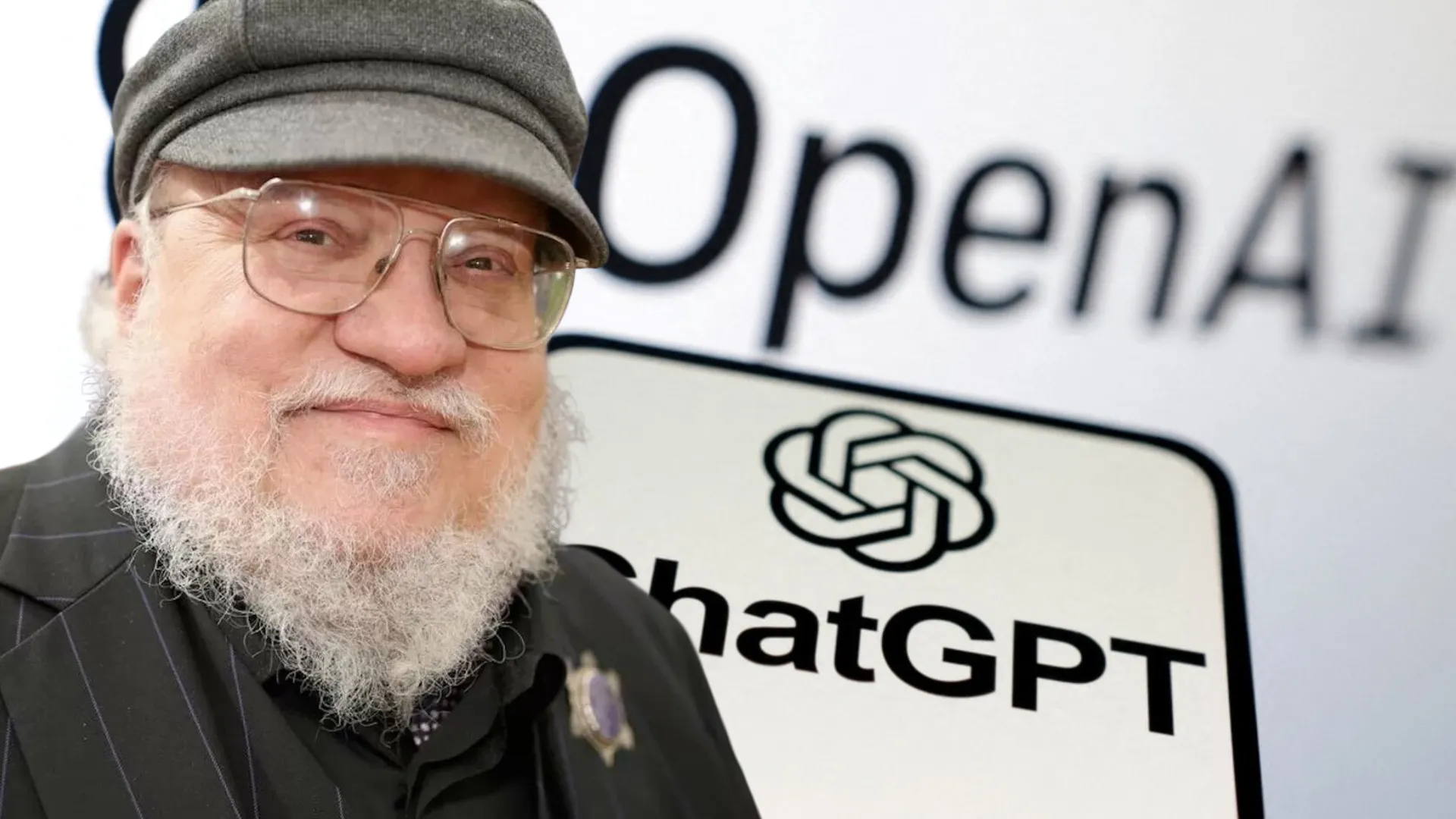
Table of Contents
Hollywood's most powerful authors have secretly coordinated a calculated legal assault against AI companies that threatens to destroy the entertainment industry's $50 billion artificial intelligence revolution, sources tell DecodeHollywood.com. Insiders say it's a desperate strike back and a fight for creative survival against tech giants attempting to replace human storytelling with algorithmic content generation.
Game of Thrones creator George R.R. Martin has quietly emerged as the general in this intellectual property war, rallying bestselling authors including John Grisham, Jodi Picoult, and Michael Chabon into what legal experts describe as the most significant copyright battle in entertainment history. "George sees this as an existential threat to everything writers have built over centuries," one source close to the author revealed to DecodeHollywood.com.
The coordinated legal offensive has already spawned 16 separate federal lawsuits against OpenAI, with potential damages reaching $50 billion as Hollywood's creative elite fight to prevent their life's work from being processed into AI training systems without permission or compensation. According to court filings obtained by The Guardian, the Authors Guild lawsuit alleges OpenAI "systematically and illegally copied" over 300,000 copyrighted books to train its GPT models.
Has Martin Been Planning This Literary Revolution?
Sources tell DecodeHollywood.com that Martin began secretly organizing author resistance over 18 months ago, after discovering that AI companies had allegedly processed his entire Song of Ice and Fire series without authorization. The revelation sparked what insiders describe as a "creative class uprising" that has studio executives quietly panicking about their AI partnerships.
"Martin called it 'the theft of human imagination' and started making calls immediately," a longtime friend of the author told DecodeHollywood.com. "He understood that if AI could generate Game of Thrones-quality content using his decades of work, then every writer becomes expendable."
The Authors Guild's September 2023 lawsuit named 17 prominent authors as plaintiffs, including literary heavyweights like Jonathan Franzen and Elin Hilderbrand. The legal action alleges that ChatGPT was trained on "systematic theft on a mass scale," with AI companies copying entire libraries of copyrighted works without consent.
Entertainment lawyers tell DecodeHollywood.com the timing represents a calculated strike while studios are most financially vulnerable. "Authors watched what happened to music artists when streaming decimated album sales," one industry source revealed. "They're not making the same mistake twice."
Is There A Hidden Financial Motive Behind The Legal Coordination?
The lawsuits reveal a sophisticated understanding of AI economics that suggests months of coordinated preparation. Court documents obtained by sources show authors' legal teams have conducted extensive financial analysis of how their copyrighted content increased AI companies' valuations.
"These aren't random copyright complaints – this is industrial espionage in reverse," one entertainment attorney told DecodeHollywood.com. "The authors hired forensic accountants to prove exactly how their stolen content made these AI companies billions."
According to reporting by The Hollywood Reporter, the legal team has identified specific passages from bestselling novels that appear to have influenced AI training, creating a direct line between copyrighted content and commercial AI products.
Internal communications allegedly obtained through discovery show OpenAI executives discussing the "incredible value" of training their models on "premium published content" rather than lower-quality internet text. "They knew exactly what they were stealing and why it was worth billions," a source close to the litigation claimed.
The financial stakes extend beyond individual author compensation. Sources tell DecodeHollywood.com that a victory could establish precedent requiring AI companies to pay licensing fees for all training data, potentially adding hundreds of billions in costs to the artificial intelligence industry.
Social Media Erupts With Creator Solidarity
The #AuthorsVsAI movement has generated over 2.3 million social media posts as creators across all industries rally behind the legal coalition. Independent writers, screenwriters, and content creators are sharing evidence of their work allegedly being processed by AI systems without consent.
"Every single creative person should be paying attention to this lawsuit," posted bestselling author Neil Gaiman on Twitter, whose works are also allegedly included in AI training datasets. "This determines whether human creativity has value or if tech companies can simply take everything we've made and profit from it."
Fan communities have launched their own investigative efforts, with Reddit threads documenting AI-generated content that appears to closely mirror specific authors' writing styles and plot structures. The r/Fantasy subreddit has created a comprehensive database tracking similarities between AI-generated stories and copyrighted works.
Contrasting voices in Silicon Valley argue that AI training constitutes fair use, but legal experts tell DecodeHollywood.com the scale of copying makes traditional fair use defenses legally problematic. "Fair use was designed for small excerpts and commentary, not wholesale digitization of entire libraries," one copyright attorney explained.
Major Studios Scrambling To Audit AI Partnerships
Behind-the-scenes sources tell DecodeHollywood.com that every major studio including Disney, Warner Bros., Netflix, and Amazon are conducting emergency legal audits of their AI development partnerships after realizing they could face secondary liability for using content trained on stolen intellectual property.
"Studio legal departments are in full panic mode," one former development executive revealed. "They've been beta-testing AI writing tools for months, not realizing those tools might be built on copyright infringement. The potential exposure is industry-ending."
Variety reported in October 2023 that the Writers Guild of America's strike settlement included specific protections against AI-generated content, but sources say those protections may be meaningless if the underlying AI systems are ruled illegal.
The lawsuits include shocking allegations about AI companies' data acquisition strategies. Court filings describe sophisticated web scraping operations that allegedly targeted digital libraries, bookstore databases, and even pirated content repositories to maximize their training datasets' commercial value.
"They weren't just copying books randomly – they were systematically targeting the most commercially successful content because it would make their AI more marketable," one tech industry whistleblower told DecodeHollywood.com.
Internal OpenAI communications allegedly show executives calculating that legal challenges would emerge too slowly to prevent market dominance. "They figured by the time authors could organize and sue, AI would be too embedded in Hollywood workflows to eliminate," the source added.
The $50 Billion Question: Will This Kill The AI Revolution?
Entertainment finance experts tell DecodeHollywood.com the financial implications could exceed previous copyright settlements by orders of magnitude, with some estimates putting potential damages at over $50 billion if courts rule that AI training constituted willful copyright infringement on an industrial scale.
"Every copyrighted work that was illegally processed could be worth statutory damages of up to $150,000," one intellectual property attorney calculated. "Multiply that by potentially millions of works across all media formats, and you're looking at damages that could bankrupt the entire AI industry."
The legal precedent extends far beyond entertainment, potentially affecting every sector where AI systems were trained on copyrighted professional content without authorization. Medical AI trained on copyrighted textbooks, legal AI using case law databases, and financial AI processing proprietary research could all face similar challenges.
"This case represents the collision between Silicon Valley's 'ask forgiveness, not permission' culture and centuries of established intellectual property law," legal scholar Rebecca Tushnet told The New York Times. "The outcome will determine whether copyright still means anything in the age of artificial intelligence."
Sources close to the author coalition tell DecodeHollywood.com they're prepared for a multi-year legal battle that could fundamentally reshape the relationship between technology and creativity. "Martin and the other authors aren't just fighting for money – they're fighting for the survival of human authorship," one insider revealed.
Those who know Hollywood's power dynamics best say this confrontation was inevitable. "You can't build trillion-dollar companies by stealing from the people who actually create value and expect them not to eventually fight back," a veteran entertainment attorney told DecodeHollywood.com. "The authors may have been slow to organize, but when they strike, they're aiming to end the threat permanently."
Sources:
- The Guardian - Authors file class action lawsuit against Meta
- The Authors Guild - John Grisham, Jodi Picoult, David Baldacci, George R.R. Martin, and 13 Other Authors File Class-Action Suit Against OpenAI
- The Hollywood Reporter - Authors OpenAI lawsuit analysis
- Neil Gaiman Twitter statement
- Variety - WGA AI protections coverage