
The JoJo Siwa Transformation Scandal: From Child Star to $25M VIP Nightmare
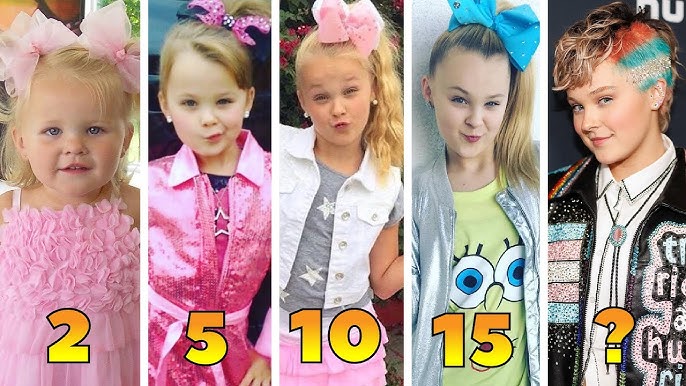
Table of Contents
JoJo Siwa has secretly weaponized her controversial image overhaul into a multimillion-dollar scheme that treats loyal fans as unpaid labor, sources tell DecodeHollywood.com. Insiders say the 21-year-old's jarring pivot from sparkly child entertainer to self-proclaimed adult provocateur, complete with a jaw-dropping $900 VIP concert package requiring fans to work as roadies, exposes the darkest side of how former child stars monetize their desperate attempts to stay relevant.
The Dance Moms alumna shocked the entertainment industry in March 2025 by announcing her "JoJo Siwa Live" tour featuring three VIP tiers, with the most expensive "Dream Guest VIP" experience priced at a staggering $944.60. The package's most controversial element promised superfans they could arrive during load-in to "help set up" the concert stage, "test equipment," and provide input on song selection while paying nearly $1,000 for what critics immediately labeled as disguised free labor.
"This represents everything toxic about how child stars view their fanbase once they age out of their original demographic," one concert industry executive tells DecodeHollywood.com. "JoJo built a $25 million empire off seven-year-olds buying her bows and now she's literally charging those same kids, now teenagers, to do work her actual crew gets paid union wages to perform. It's exploitation masquerading as exclusivity."
Did JoJo Siwa's Team Engineer the Worst Rebrand in Modern Entertainment?
The VIP scandal erupted as the culmination of what industry observers describe as one of the most tone-deaf celebrity transformations in recent memory. Siwa's attempted evolution from Nickelodeon darling to edgy adult artist began catastrophically in April 2024 with the release of her single "Karma," accompanied by a music video featuring aggressive choreography that became an instant meme for all the wrong reasons.
The song itself represented the first major red flag in her rebrand strategy. Despite Siwa framing "Karma" as her authentic artistic statement, investigative fans quickly discovered the track was originally a rejected Miley Cyrus demo that had been previously recorded by artist Brit Smith years earlier. Siwa possessed zero writing credits on the song she claimed represented her genuine evolution into adulthood.
"She went on every interview circuit comparing herself to Lady Gaga and Miley Cyrus, talking about how no one in her generation had made such a dramatic transformation," reveals one music publicist who worked adjacent to the campaign. "But she wasn't transforming, she was costume-changing. Lady Gaga and Miley earned their evolutions through years of artistic risk-taking. JoJo just bought black leather and aggressive choreography, then expected the world to take her seriously as an adult artist."
The promotional rollout included transparently calculated paparazzi photographs of Siwa leaving adult stores in Los Angeles carrying oversized phallic plushies, magazine photoshoots featuring her in a jeweled corset with a prominent fake bulge, and perhaps most damningly, claims that she had "invented gay pop" and was pioneering a new genre of music.
That assertion sparked immediate backlash from LGBTQ+ artists and advocates who pointed out that David Bowie, Freddie Mercury, Elton John, Prince, Madonna, Lady Gaga, Troye Sivan, Lil Nas X, and dozens of other queer artists had been creating gay pop music for over five decades. Siwa's subsequent clarification that she "knew about other gay pop icons" failed to undo the damage of positioning herself as some kind of groundbreaking pioneer in a space she'd only recently discovered.
"The gay pop comments revealed how little research went into this rebrand," notes one LGBTQ+ entertainment journalist. "She came out as queer in 2021 and the community celebrated her because she had unique access to young audiences. We thought she'd help kids understand queer identity in age-appropriate ways. Instead she claimed to invent our musical heritage while wearing KISS makeup and doing splits. It was insulting on multiple levels."
Why Has JoJo Siwa's Rebrand Alienated Everyone Who Made Her Famous?
The fundamental miscalculation in Siwa's transformation strategy stems from a complete misunderstanding of her own brand equity and the audience that built her fortune. Unlike other child stars who gradually aged into teen and adult content, Siwa constructed her entire empire specifically targeting elementary school girls through ultra-safe, parent-approved content.
Her Nickelodeon shows, YouTube channel, stadium tours at age 15, and product lines sold at Walmart all centered on being the perpetual child. Songs like "Boomerang" addressed bullying in ways appropriate for seven-year-olds. Her signature JoJo Bows became a cultural phenomenon in elementary schools across America. She represented everything wholesome about childhood fame.
"JoJo didn't age gracefully from kid content to teen content to adult content like successful transformations require," explains one child entertainment marketing analyst. "She stayed frozen as an eternal 12-year-old personality until she turned 20, then tried to become this hypersexualized provocateur literally overnight. Parents who spent thousands on her merchandise for their daughters felt blindsided and betrayed."
The backlash intensified as Siwa's statements in interviews revealed a stunning lack of self-awareness about her place in entertainment history. She repeatedly claimed to be "the first of her generation" making such a dramatic transformation, apparently unaware that Ariana Grande, Sabrina Carpenter, Olivia Rodrigo, Dove Cameron, and Miley Cyrus had all successfully evolved from child stars to adult artists within the same generational cohort.
Saturday Night Live captured the absurdity of her rebrand in a May 2024 Weekend Update segment where Chloe Fineman portrayed Siwa responding to questions about her "big transformation" by saying, "Yeah, yeah. It's a pretty big change. I used to be rainbow sparkles, and now I'm black sparkles!" The audience erupted in laughter at the accurate observation that Siwa had merely changed color schemes without any genuine artistic evolution.
Social media reactions throughout 2024 and 2025 ranged from secondhand embarrassment to genuine concern for her wellbeing. "She's trying so hard to be provocative that it just comes across as desperate," one viral tweet observed. "It's like watching someone have a quarter-life crisis in real-time and monetizing every cringey moment."
Is Charging Fans $900 to Work Actually Legal?
The Dream Guest VIP package represents the logical endpoint of viewing fans as exploitable revenue streams rather than human beings deserving respect. For $944.60, fans receive one premium floor ticket, early merchandise access, an autographed tour poster, a branded "glam bag," VIP laminate, and the controversial "exclusive invitation to JoJo's live show setup."
According to tour documentation and Siwa's own promotional interviews, Dream Guest ticket holders arrive during the venue's load-in period to "help set up" the show, "test out the drum kit and DJ booth," "make sure things are right," and provide "song selection input." The description reads less like a premium fan experience and more like an unpaid internship with entertainment industry equipment.
The immediate social media response was brutal and unforgiving. "Jojo Siwa having a $900 vip ticket package where you can help set up the stage... girl what kinda shit is that," read one viral tweet that generated hundreds of thousands of likes. Another commented, "Paying $900 to work manual labor is the final stage of capitalism." A third added, "This feels like a $900 health and safety risk experience."
Critics highlighted that actual professional roadies earn union wages to perform the exact tasks Siwa was charging fans $900 to do. The comparison to legitimate concert crew work raised questions about liability, safety, and whether untrained fans handling expensive audio equipment could result in injuries that would create legal nightmares for the tour.
Siwa attempted damage control at the GLAAD Media Awards on March 27, 2025, telling reporters that helping with setup was completely optional. "If they want to join in on the fun, they totally can," she explained. "If they would just rather sit back and watch, they totally can." Sources close to the singer insisted to media outlets that the package was meant to give fans an exclusive behind-the-scenes perspective, not to exploit them as unpaid labor.
The clarification satisfied virtually no one. If helping with setup is optional, critics asked, why advertise it as a primary package perk? And why charge $900 for the privilege of watching roadies do their jobs, an experience available for free to anyone who arrives early at most venues? The explanation raised more questions than it answered about what fans were actually paying for beyond standard VIP amenities.
Are Other Artists Adopting JoJo Siwa's Exploitative Pricing Model?
Siwa's controversial VIP package exists within a broader entertainment industry trend toward increasingly expensive and ethically questionable fan engagement strategies. KISS frontman Gene Simmons faced similar backlash for his $12,495 "Ultimate Gene Simmons Experience" that included fans serving as his "personal assistant and band roadie," though critics noted that package at least included a signed bass guitar and came from a rock legend with 50 years of credibility.
The comparison actually illuminates how much worse Siwa's value proposition appears. Simmons, an iconic musician who helped define arena rock, charged $12,500 for a comprehensive multi-day experience including instruments and intensive access to a living legend. Siwa, whose primary claim to fame is wearing bows on Dance Moms and selling children's merchandise, charged $900 for fans to test her microphones and move speakers.
"The VIP package crystallizes JoJo's complete disconnect from normal fan relationships," notes one concert industry analyst. "Fans attend concerts to feel special, to create memories, to experience art. They don't come to do quality control on audio equipment or help roadies run cables. Making them pay $900 for that experience reveals how little she values or understands the people who made her wealthy."
The other VIP tiers offer similarly questionable value. The $413.60 "Ultimate VIP" package includes a standard meet-and-greet, special merchandise, and early entry but nothing justifying the premium over general admission pricing. The $236.60 "VIP Meet & Greet" provides the bare minimum expected from any artist VIP experience at a cost that prices out most of her original young fanbase.
Tour promotional materials note that "$1 from every ticket sold will be donated to the Dancers Against Cancer Charity," where Siwa serves as a board member. The charitable angle failed to mitigate criticism, with observers noting that donating one dollar per ticket after charging $900 for questionable labor experiences felt more like reputation management than genuine philanthropy.
Social media users also highlighted the irony of Siwa marketing her tour as an accessible "GAYPOP DJ Set" and "immersive party" while pricing most LGBTQ+ young people out of attending through VIP packages that cost more than many people's monthly rent. The disconnect between her stated values of inclusivity and her actual pricing strategy became another focal point for criticism.
What Does This Transformation Disaster Teach About Child Star Evolution?
Siwa's failed rebrand and exploitative tour pricing offer a comprehensive case study in how not to transition from child star to adult artist. Her trajectory contrasts catastrophically with successful transformations from both her generation and previous eras.
Miley Cyrus spent 2010-2013 gradually transitioning from Hannah Montana through albums like "Can't Be Tamed" and "Bangerz," allowing audiences to grow with her while she explored more mature themes through genuine artistic experimentation. Ariana Grande evolved from Nickelodeon's Sam & Cat to legitimate pop superstardom by focusing on undeniable vocal talent and sophisticated R&B influences. Sabrina Carpenter and Olivia Rodrigo leveraged Disney Channel fame into respected music careers through authentic songwriting and artistic credibility.
"Successful child star transformations share common elements that JoJo completely ignored," observes one entertainment industry consultant. "Gradual evolution over years, not months. Genuine artistic growth demonstrated through original songwriting or performance innovation. Respect for the fanbase that built you. And critically, talent that justifies the new direction. JoJo had none of those foundations. She changed her wardrobe and expected everyone to forget she can't write songs and has limited vocal range."
The instability of Siwa's rebrand became even more apparent in July 2025 when she pivoted again to a 1930s Bette Davis-inspired aesthetic complete with blonde wigs, pearls, and old Hollywood glamour. The sudden shift prompted fans to ask, "Can she pick a side already?" and reinforced perceptions that she was less interested in authentic self-expression and more focused on chasing whatever aesthetic might generate headlines in any given week.
"She's not evolving, she's cycling through personas like they're Instagram filters," notes one pop culture critic. "That's not artistic growth, that's desperation. And when you combine that desperation with charging fans $900 to work your show, you get a career death spiral disguised as a transformation."
Where Does JoJo Siwa's Career Go After This Nightmare?
The transformation scandal and VIP pricing debacle leave Siwa facing a career crisis with no obvious path forward. Her July 2025 tour will serve as the ultimate test of whether she retains any loyal fanbase willing to overlook the controversies, or whether her attempted adult rebrand has permanently destroyed the goodwill that made her a child star phenomenon.
Early ticket sales reportedly show deeply mixed results across markets. Some venues in LGBTQ+ friendly cities have sold well among fans curious about the spectacle or genuinely supportive of her queer visibility. Other markets struggle to move inventory, with the Dream Guest VIP packages remaining available in multiple cities weeks after going on sale, suggesting even her most devoted fans question whether $900 to test drum kits represents acceptable value.
"JoJo's team fundamentally misunderstood that you can't build a sustainable adult career on controversy and shock value alone," concludes one music industry insider. "Eventually you need actual talent, actual songs people want to hear, actual artistry that justifies attention. Right now she has aggressive choreography to songs she didn't write, a series of embarrassing statements she had to walk back, and a reputation for treating fans like exploitable resources. That's not a career foundation, that's a case study in how to destroy everything you built as a child star."
For parents who invested in JoJo Siwa's brand when their daughters were in elementary school, the transformation represents a profound betrayal of trust. For LGBTQ+ advocates who hoped she would use her platform to help young people navigate queer identity, the "invented gay pop" claims and calculated provocations feel opportunistic rather than authentic. For entertainment ethics observers, the VIP packages exemplify everything wrong with how celebrities increasingly view fans as revenue streams to exploit rather than people deserving respect.
The tragedy isn't that JoJo Siwa wanted to grow up and evolve as an artist. Artists should evolve. The tragedy is that she confused evolution with shock tactics, mistook controversy for credibility, and concluded that fans existed primarily to fund increasingly desperate attempts to remain famous by any means necessary. That's not transformation, it's exploitation, and the $900 VIP packages charging fans to work represent just the most obvious symptom of a career built on foundations that were never meant to support adult ambitions.
Sources:
- BuzzFeed - JoJo Siwa's $900+ VIP Concert Prices Spark Backlash
- Today - JoJo Siwa defends controversial $900 VIP ticket
- TMZ - JoJo Siwa Defends $900 VIP Tour Experience, Says It's Not Unpaid Labor
- NME - JoJo Siwa offers $900 VIP package to "help" set up live shows
- Cosmopolitan - JoJo Siwa Breaks Her Silence After Fans Clock Her for $900 VIP Tour Tickets